
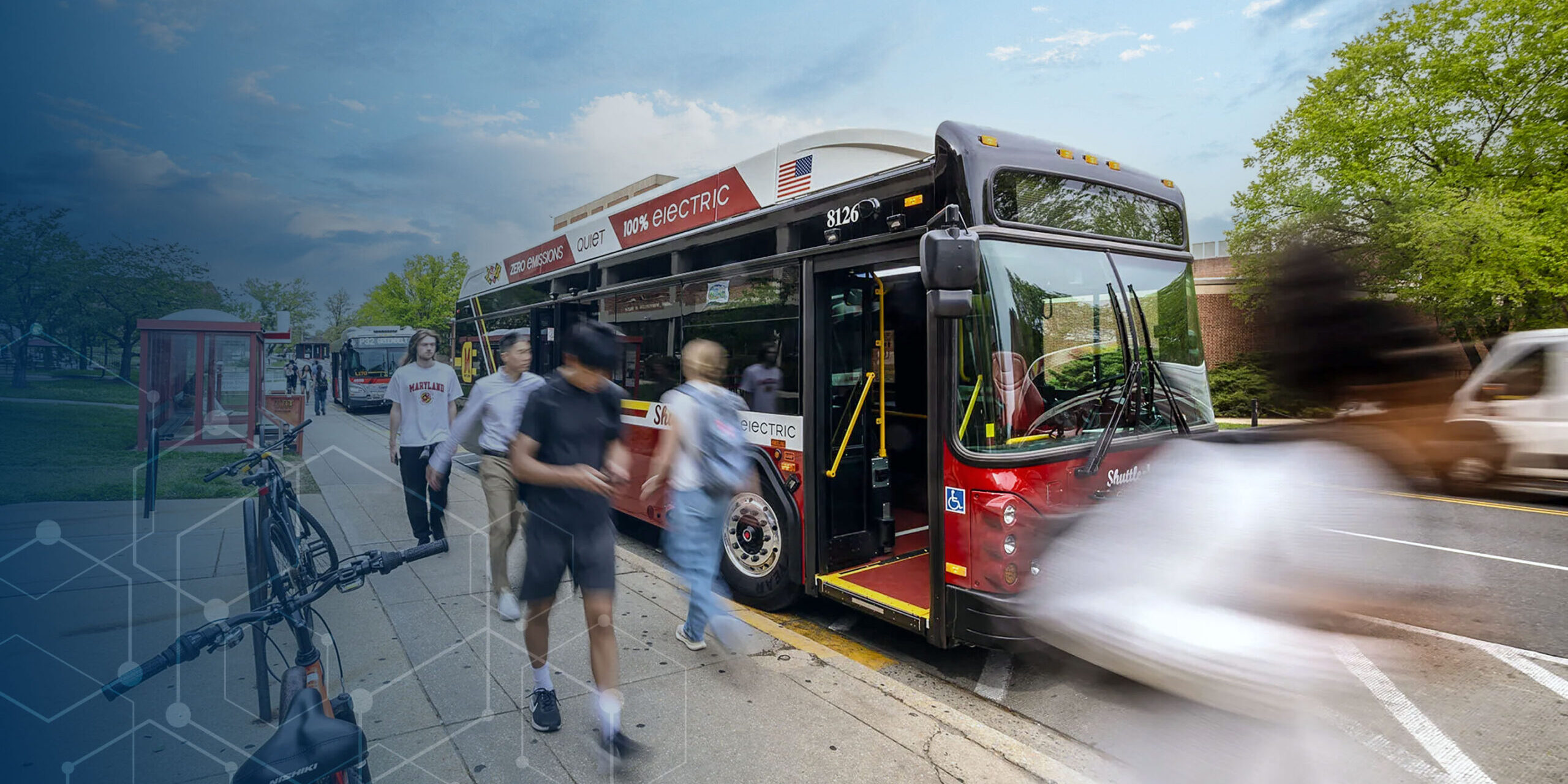
The University of Maryland’s first two all-electric GILLIG Battery Electric Shuttle-UM buses drove onto campus this month, heralding a future in which nearly 60% of the fleet will be diesel-free.
At the university’s EarthFest celebration, the new buses were stationed for students to get a sneak peek before they go into operation in Fall 2026.
Twenty-five additional all-electric buses will join the fleet by Fall 2027, thanks to a nearly $40 million grant from the U.S. Department of Transportation’s Federal Transit Administration (FTA). Part of the FTA’s Low-No Program, the grant funded the buses, 16 charging stations with a total of 32 charging ports and infrastructure work.
The electric buses—16 of which are 35 feet long and 11 of which are 40 feet—will replace Shuttle-UM’s oldest buses and will run along all of its routes. In total, the new vehicles will save an estimated 130,000 gallons of diesel fuel annually.
Only a handful of other universities have electric buses, said Julianna Greenberg ’19, grants manager for the Department of Transportation Services (DOTS). “We are one of a select group.”
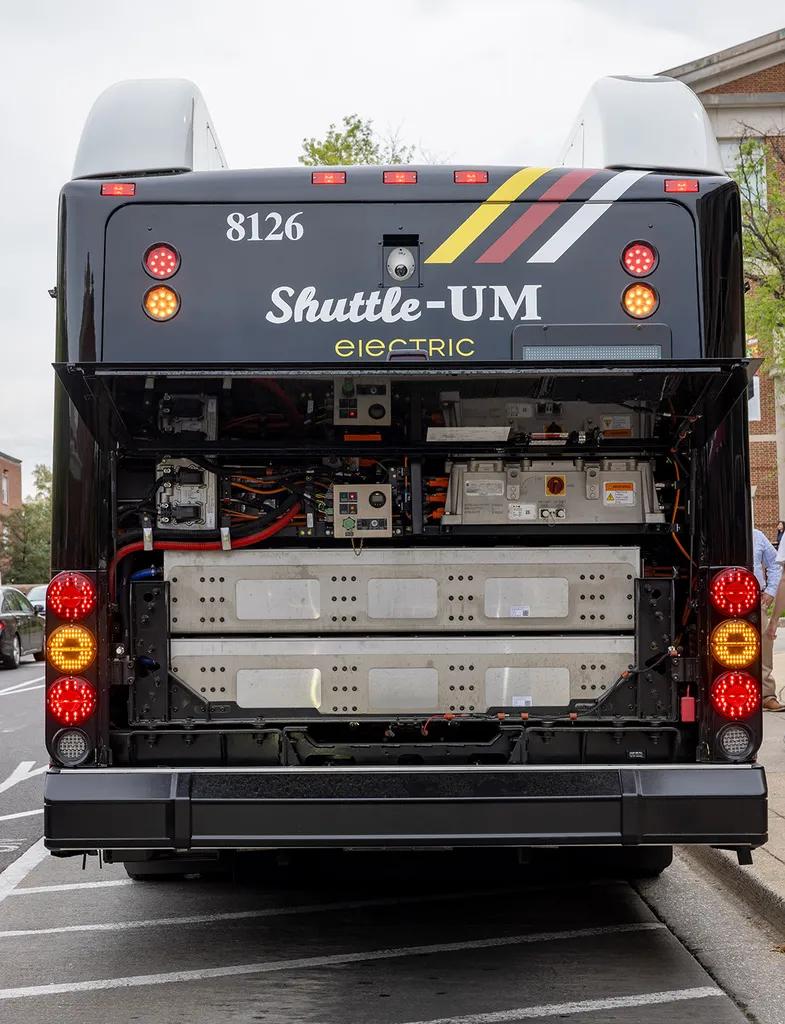
Batteries: At the back of the bus, where the engine sits in conventional transit vehicles, two batteries are stacked on top of one another. Four more are located on the roof, and a seventh battery is underneath the bus’ body. “The range is what we consider the most, so we wanted to get the most number of batteries,” said Peter Agustin, fleet manager at Shuttle-UM. “Six was the standard, but we opted to get seven, which increased our range to close to 250 miles per full charge.”
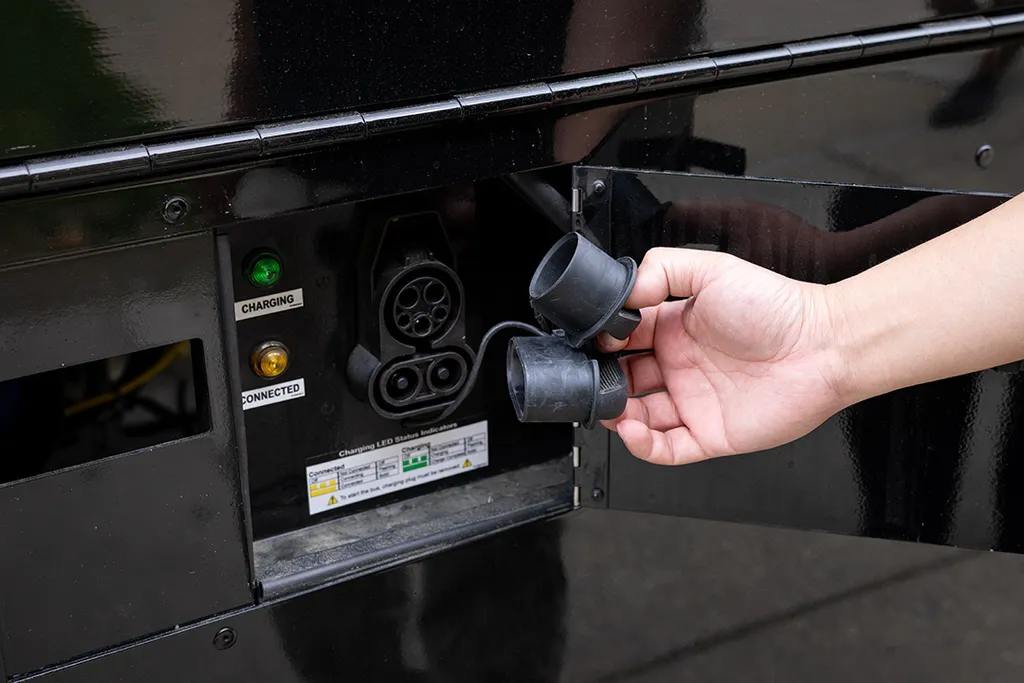
Charging port: The buses should be plugged in for four to six hours to reach full charge.
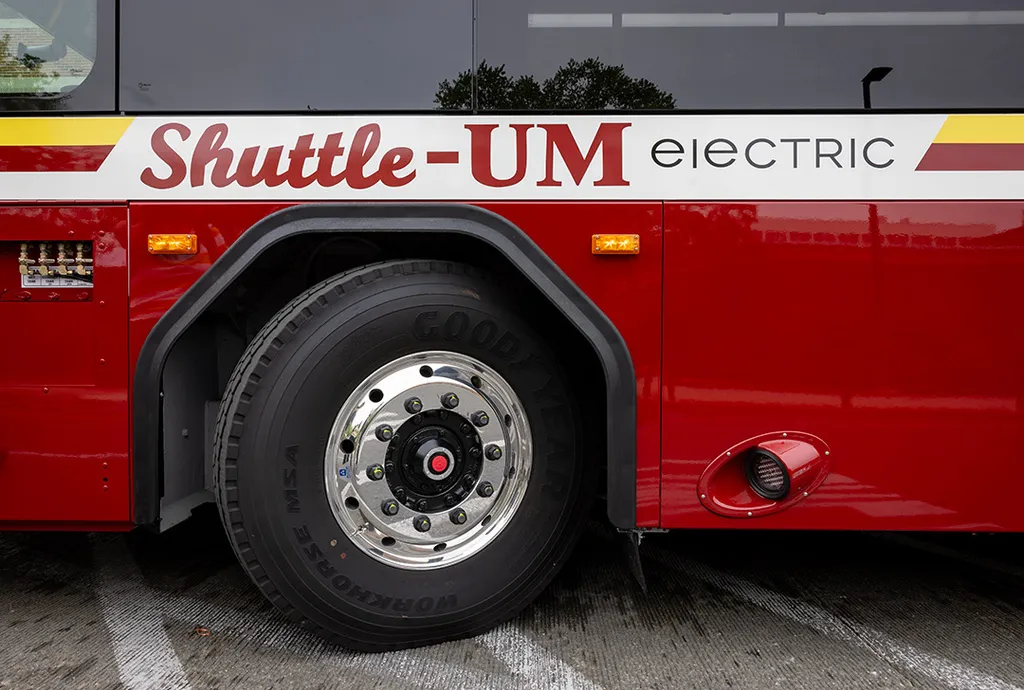
Wider wheels: The electric buses require wider wheels than conventional buses to carry the added weight of seven batteries, which render them nearly 5,000 pounds heavier than their diesel counterparts.
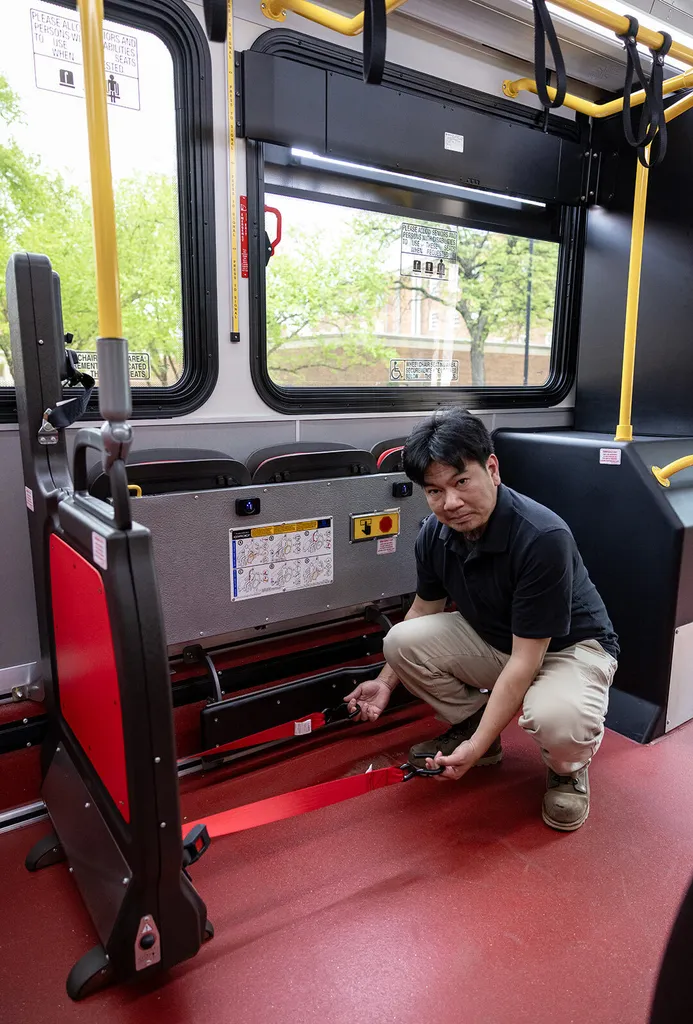
Updated wheelchair securements: A new system, in which wheelchair attachment straps are tethered to the wall instead of the floor, makes it “easier and faster to properly secure a mobility device,” said Armand Scala, DOTS senior associate director.
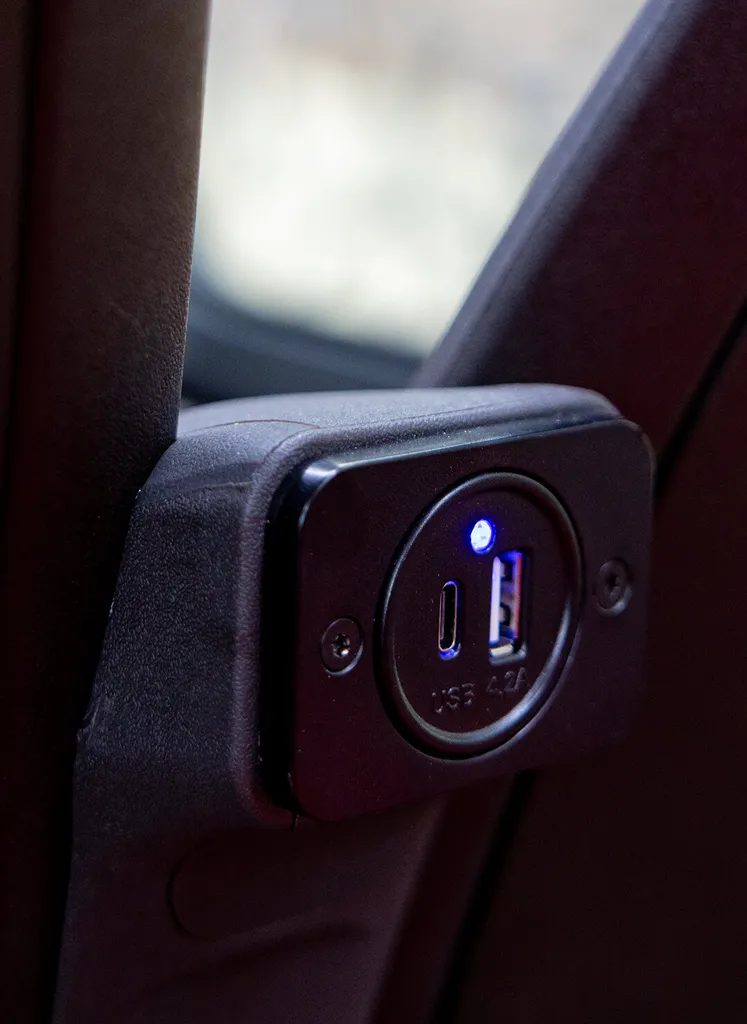
USB ports: Nestled between each pair of seats on the bus is a feature DOTS riders have long requested: a USB port to keep their phones and other devices charged.
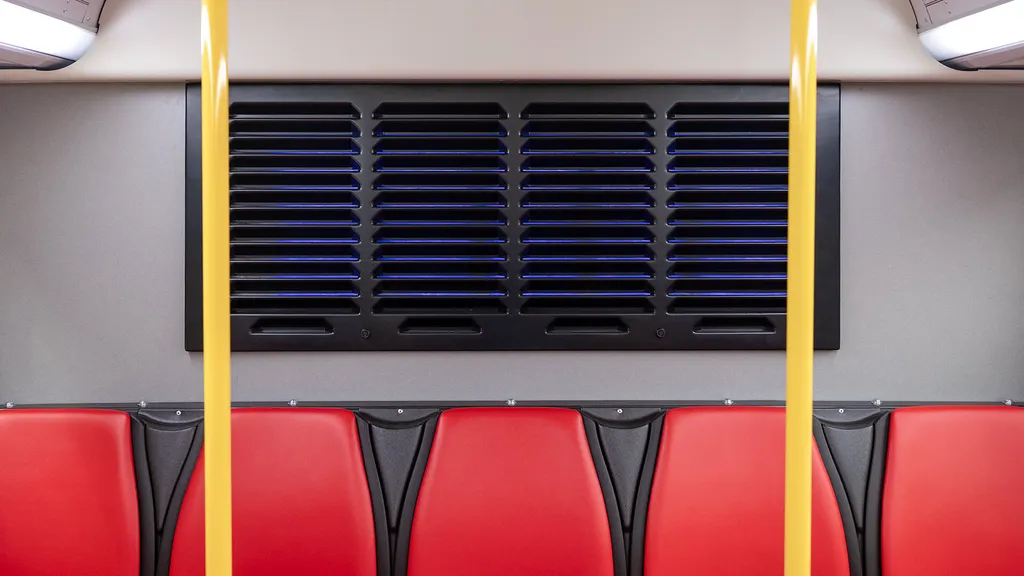
UV air purifiers: Glowing blue in the back of the bus, state-of-the-art UV air purifiers enhance air quality on the vehicles.